Navigating CRM system pricing can feel like decoding a secret language. With plans ranging from free to thousands per month, understanding what you’re really paying for is crucial to making a smart investment.
CRM System Pricing: What You Need to Know

Customer Relationship Management (CRM) systems have become essential tools for businesses aiming to streamline sales, marketing, and customer service operations. However, one of the biggest hurdles companies face is understanding CRM system pricing models. These systems vary widely in cost, features, and scalability, making it difficult to determine which solution offers the best value.


According to Gartner, the global CRM software market was valued at over $50 billion in 2023 and continues to grow rapidly. This surge is driven by digital transformation and the increasing need for data-driven customer engagement. But with so many vendors and pricing tiers, how do you choose the right one without overspending?
Why CRM Pricing Is So Complex
CRM system pricing isn’t just about the sticker price. It involves multiple layers including user count, feature access, integration capabilities, and deployment models. Unlike simple software subscriptions, CRMs often bundle services like automation, analytics, AI tools, and third-party integrations—each affecting the final cost.
For example, a basic CRM might charge $10/user/month, but adding marketing automation or advanced reporting could double that price. Hidden costs such as onboarding, training, customization, and support also contribute to the total expense over time.
- Multiple pricing tiers based on functionality
- Variable costs depending on number of users
- Additional fees for premium support or integrations
Common CRM Pricing Models
Vendors use several pricing strategies to cater to different business sizes and needs. Understanding these models helps you compare apples to apples when evaluating options.
- Per-User, Per-Month: The most common model where cost scales with the number of users. Ideal for growing teams but can become expensive at scale.
- Tiered Feature-Based: Different packages (e.g., Starter, Professional, Enterprise) offer increasing levels of functionality at higher prices.
- Flat-Rate Plans: A single price for unlimited users within certain limits. Great for small businesses with tight budgets.
- Usage-Based: Charges based on activity, such as emails sent, contacts stored, or API calls made.
For instance, Zoho CRM offers a free plan for up to 3 users and tiered paid plans starting at $14/user/month, while Salesforce starts around $25/user/month but can exceed $300/user/month for enterprise-grade features.
“The true cost of a CRM isn’t just the subscription—it’s the time, training, and integration required to make it work effectively.” — CRM Industry Analyst, 2023
Factors That Influence CRM System Pricing
Several key elements determine how much you’ll pay for a CRM system. These aren’t always transparent in vendor marketing materials, so it’s important to dig deeper before committing.
CRM System Pricing – CRM System Pricing menjadi aspek penting yang dibahas di sini.
Number of Users and Roles
Most CRM platforms charge per user, but not all users cost the same. Some vendors differentiate between full-access users and limited-license users (e.g., for customer service reps who only need read-only access).
For example, Microsoft Dynamics 365 offers different license types: Sales Enterprise ($95/user/month), Customer Service App ($70/user/month), and Team Members ($6/user/month). This allows organizations to optimize costs by assigning appropriate licenses based on job function.
Scaling beyond 50 users can significantly increase your monthly bill, especially if every employee needs full CRM access. Consider whether role-based permissions can help reduce licensing costs.
Feature Depth and Automation
The more advanced the features, the higher the CRM system pricing. Basic contact management is cheap; predictive analytics, AI-powered insights, and workflow automation are premium add-ons.
- Lead scoring and routing
- Email automation and campaign tracking
- AI-driven forecasting and sentiment analysis
- Custom reporting and dashboarding
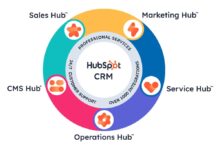
HubSpot, for example, separates its CRM Hub from its Marketing, Sales, and Service Hubs. While the core CRM is free, adding automation features starts at $45/month and goes up to $5,000+/month for enterprise plans.
Deployment Type: Cloud vs On-Premise
Cloud-based CRMs dominate the market due to their ease of deployment and lower upfront costs. However, on-premise solutions still exist, particularly for large enterprises with strict data governance requirements.
Cloud CRM pricing is typically subscription-based (SaaS), while on-premise involves large upfront licensing fees, hardware costs, and ongoing maintenance. For example, Oracle CRM On-Premise can cost hundreds of thousands of dollars in initial setup, plus annual support fees.
According to IDC, over 80% of new CRM deployments in 2023 were cloud-based, highlighting the shift toward flexible, scalable solutions.
CRM System Pricing – CRM System Pricing menjadi aspek penting yang dibahas di sini.
Top CRM Platforms and Their Pricing Breakdown
To make informed decisions, let’s examine some of the leading CRM platforms and how their CRM system pricing stacks up across different business needs.
Salesforce: The Enterprise Leader
Salesforce remains the gold standard for enterprise CRM, offering unparalleled customization and ecosystem integration. However, its pricing reflects its premium positioning.
- Sales Cloud Essentials: $25/user/month – Basic sales automation
- Professional: $75/user/month – Advanced reporting and customization
- Enterprise: $150/user/month – Full API access, workflow automation
- Unlimited: $300/user/month – 24/7 support, sandbox environments
Additional costs include Pardot for marketing automation ($1,250/month minimum), Einstein AI add-ons, and implementation services that can run into tens of thousands of dollars.
Despite the high price, Salesforce’s AppExchange offers over 5,000 integrations, making it a powerful choice for complex organizations.
HubSpot: Best for SMBs and Marketing Integration
HubSpot has gained popularity for its user-friendly interface and seamless marketing-sales-service alignment. Its freemium model makes it accessible, but costs rise quickly with added functionality.
- Free CRM: $0 – Unlimited users, basic contact and deal tracking
- Starter: $45/month – Email automation, live chat, forms
- Professional: $450/month – Advanced workflows, A/B testing
- Enterprise: $1,200/month – Custom objects, predictive lead scoring
Each hub (Marketing, Sales, Service, CMS) is priced separately, so a full suite can easily exceed $2,000/month. Still, HubSpot’s intuitive design and educational resources make it ideal for small to mid-sized businesses.
Microsoft Dynamics 365: Deep Office 365 Integration
For companies already using Microsoft 365, Dynamics 365 offers tight integration with Outlook, Teams, and Power BI. It’s particularly strong in sales and customer service automation.
- Sales Professional: $65/user/month
- Customer Service Professional: $70/user/month
- Field Service: $95/user/month
- Enterprise Bundle: Custom pricing, often $100+/user/month
Dynamics 365 also offers a unique Team Members license ($6/user/month) for employees who need limited access, helping control costs. Implementation, however, often requires third-party consultants, adding to the total cost of ownership.
CRM System Pricing – CRM System Pricing menjadi aspek penting yang dibahas di sini.
Hidden Costs in CRM System Pricing
The advertised price is rarely the full story. Many businesses underestimate the total cost of ownership (TCO) because they overlook hidden expenses that accumulate over time.
Implementation and Onboarding Fees
Setting up a CRM isn’t plug-and-play. Data migration, user training, workflow configuration, and integration with existing systems require time and expertise.
Vendors like Salesforce and Oracle often charge $5,000–$50,000+ for professional implementation services. Even with DIY setups, internal staff hours add up. A study by Nucleus Research found that the average company spends 1.5 times the annual license fee on implementation alone.
Customization and Development
Off-the-shelf CRM features rarely fit every business perfectly. Custom fields, workflows, dashboards, and automation rules often require coding or third-party tools.
Platforms like Salesforce allow extensive customization via Apex and Lightning, but this demands skilled developers. Hiring a Salesforce admin or developer can cost $80–$150/hour, significantly increasing long-term costs.
Ongoing Support and Training
User adoption is a major challenge. Without proper training, employees may resist using the CRM or use it incorrectly, reducing ROI.
Premium support plans (e.g., 24/7 phone support, dedicated account managers) come at an extra cost. Salesforce’s Premium Support adds 19% to the license fee annually. Internal training programs, refreshers, and change management also require budget allocation.
“70% of CRM failures are due to poor user adoption, not technical shortcomings.” — Panorama Consulting Solutions, 2022
How to Choose the Right CRM Based on Pricing
Selecting a CRM isn’t just about finding the cheapest option—it’s about maximizing value. The right CRM system pricing structure should align with your business size, goals, and growth trajectory.
CRM System Pricing – CRM System Pricing menjadi aspek penting yang dibahas di sini.
Assess Your Business Size and Needs
Small businesses should prioritize affordability and ease of use. A free or low-cost CRM like Zoho or HubSpot may suffice. Mid-sized companies need scalability and automation, while enterprises require robust security, customization, and integration.
Ask: Do you need AI? Multi-channel support? Advanced analytics? The more complex your needs, the higher the CRM system pricing you should expect.
Calculate Total Cost of Ownership (TCO)
Don’t just look at the monthly subscription. Factor in:
- Implementation and setup
- Training and change management
- Integration with existing tools (e.g., email, ERP, e-commerce)
- Customization and development
- Ongoing support and renewal fees
A CRM that costs $50/user/month but requires $20,000 in setup may be more expensive than a $100/user/month solution with free onboarding.
Look for Scalability and Flexibility
Choose a CRM that grows with you. Can you add users easily? Upgrade features without data loss? Switch plans seamlessly?
Platforms like Zoho CRM and Freshsales allow gradual upgrades without vendor lock-in. Avoid long-term contracts unless you’re certain about your needs.
Free vs Paid CRM: Is Free Really Better?
Free CRMs are tempting, especially for startups and solopreneurs. But are they sustainable in the long run?
Pros of Free CRM Systems
- No financial risk for testing
- Unlimited users in some cases (e.g., HubSpot Free)
- Basic features like contact management, deal tracking, and email integration
- Good for learning CRM fundamentals
Free versions from HubSpot, Zoho, and Freshworks provide solid foundations without upfront investment.
CRM System Pricing – CRM System Pricing menjadi aspek penting yang dibahas di sini.
Cons of Free CRM Systems
- Limited automation and reporting
- No phone support or SLAs
- Brand-labeled communications (e.g., ‘Powered by HubSpot’)
- Restricted integrations and API access
- Scalability limits (e.g., max 1M contacts)
As your business grows, you’ll likely need to upgrade. The transition can involve data migration and retraining, adding hidden costs.
“A free CRM is a great starting point, but it’s rarely a long-term solution for growing businesses.” — TechRadar, 2023
Future Trends in CRM System Pricing
The CRM landscape is evolving rapidly, driven by AI, automation, and changing buyer expectations. These shifts are reshaping how vendors price their offerings.
Rise of AI-Powered Features
AI is no longer a luxury—it’s becoming a standard expectation. Features like predictive lead scoring, chatbots, and sentiment analysis are being bundled into higher-tier plans.
Vendors like Salesforce (Einstein AI) and Microsoft (Dynamics 365 AI) charge premium rates for these capabilities. Expect AI add-ons to become a separate line item in CRM system pricing, similar to how cloud storage is billed today.
Consolidation of Sales, Marketing, and Service
Modern CRMs are evolving into unified platforms that span the entire customer journey. This convergence means vendors are bundling marketing automation, customer service, and e-commerce tools into single suites.
While this simplifies management, it can increase costs. Companies that only need sales automation may end up paying for unused service modules.
Increased Focus on Value-Based Pricing
Some vendors are experimenting with value-based models—charging based on ROI delivered rather than user count. For example, a CRM might charge a percentage of closed deals facilitated through the platform.
Though still rare, this model could gain traction as businesses demand more accountability from software investments.
CRM System Pricing – CRM System Pricing menjadi aspek penting yang dibahas di sini.
What is the average cost of a CRM system?
The average cost of a CRM system ranges from $10 to $100 per user per month. Small businesses can start with free or $10–$25/user/month plans, while enterprise solutions like Salesforce can exceed $300/user/month with add-ons.
Are there any truly free CRM systems?
Yes, several vendors offer free CRM systems with basic functionality. HubSpot CRM, Zoho CRM, and Freshsales all provide free plans with unlimited users, though advanced features require paid upgrades.
What is the biggest hidden cost in CRM system pricing?
The biggest hidden cost is implementation and onboarding. This includes data migration, user training, customization, and integration, which can equal or exceed the annual license fee.
Can I negotiate CRM pricing with vendors?
Yes, especially for enterprise plans. Vendors like Salesforce, Microsoft, and Oracle often offer discounts for annual commitments, multi-year contracts, or bundled purchases. Always ask for a quote and negotiate terms.
CRM System Pricing – CRM System Pricing menjadi aspek penting yang dibahas di sini.
Which CRM offers the best value for small businesses?
HubSpot CRM and Zoho CRM are widely regarded as the best value for small businesses. Both offer robust free plans and affordable paid tiers with strong automation and integration capabilities.
Choosing the right CRM system pricing model requires more than just comparing monthly fees. It demands a deep understanding of your business needs, growth plans, and total cost of ownership. From free tiers to enterprise suites, the market offers solutions for every budget—but the cheapest option isn’t always the most cost-effective. By evaluating features, hidden costs, scalability, and vendor support, you can select a CRM that delivers real ROI and drives long-term success.
Further Reading:
